 Instify
Claude Code vs OpenAI Codex: When to Use Which
If you’re building with AI coding agents, two names come up constantly: Claude Code (Anthropic) and OpenAI Codex. The usual question — “which one is better?” — is the wrong question. They’re both excellent, and they’re good at different things. The useful question is: which one for this task?
Here’s how to decide, based on how they behave in practice. (Both improve fast, so treat this as a mental model, not a fixed scorecard.)
The short version
- Reach for Claude Code when the work needs reasoning: architecture decisions, refactors that span files, unfamiliar or large codebases, “figure out why this breaks.”
- Reach for Codex when the work is well-defined: a clear, scoped task where speed of implementation matters more than deliberation.
Most real projects have both kinds of work — which is exactly why picking one agent for everything leaves value on the table.
Where Claude Code shines
Claude Code tends to be strong when a task rewards thinking before typing:
- Architecture & design — weighing trade-offs, choosing a pattern, planning a change before touching code.
- Multi-step changes — features that touch several files and need a coherent plan.
- Understanding a codebase — getting oriented in code it (and you) didn’t write, and making changes that respect the existing structure.
- Debugging by reasoning — “this is failing, work out why,” rather than a guess-and-check.
If you’d want a thoughtful senior engineer on the task, that’s Claude Code’s lane.
Where Codex shines
Codex tends to be strong when the task is already clear and you want it done:
- Well-scoped implementation — a story with a crisp definition of done, no ambiguity to reason through.
- Speed on the routine — the bread-and-butter changes that don’t need a design debate.
- Momentum — knocking out a queue of small, defined tasks.
If you’d hand it to a fast implementer with clear instructions, that’s Codex’s lane.
How to choose, per task
A rough rule that holds up:
The more the task needs judgment, the more it favors Claude Code. The more it’s already decided, the more it favors Codex.
- “Design and build auth for this app” → Claude Code (lots of judgment).
- “Add a status filter to the invoices dashboard, persist it in the URL” → Codex (fully specified).
- “Figure out why localStorage crashes on load and fix it” → Claude Code (diagnosis).
- “Rename this field across the codebase and update the tests” → Codex (mechanical).
Which is why the sharpest workflow isn’t “pick a side” — it’s matching the agent to the task, task by task.
You don’t have to choose
This is exactly the model Instify is built around. Instead of committing your whole project to one agent, you assign the right agent per story:
- Set a default agent for the project, and override it per card when a task wants the other one.
- Claude Code plans the architecture-heavy story; Codex burns through the well-defined ones — on the same board, in the same flow.
- Every run is saved to history, so you can see which agent did what.
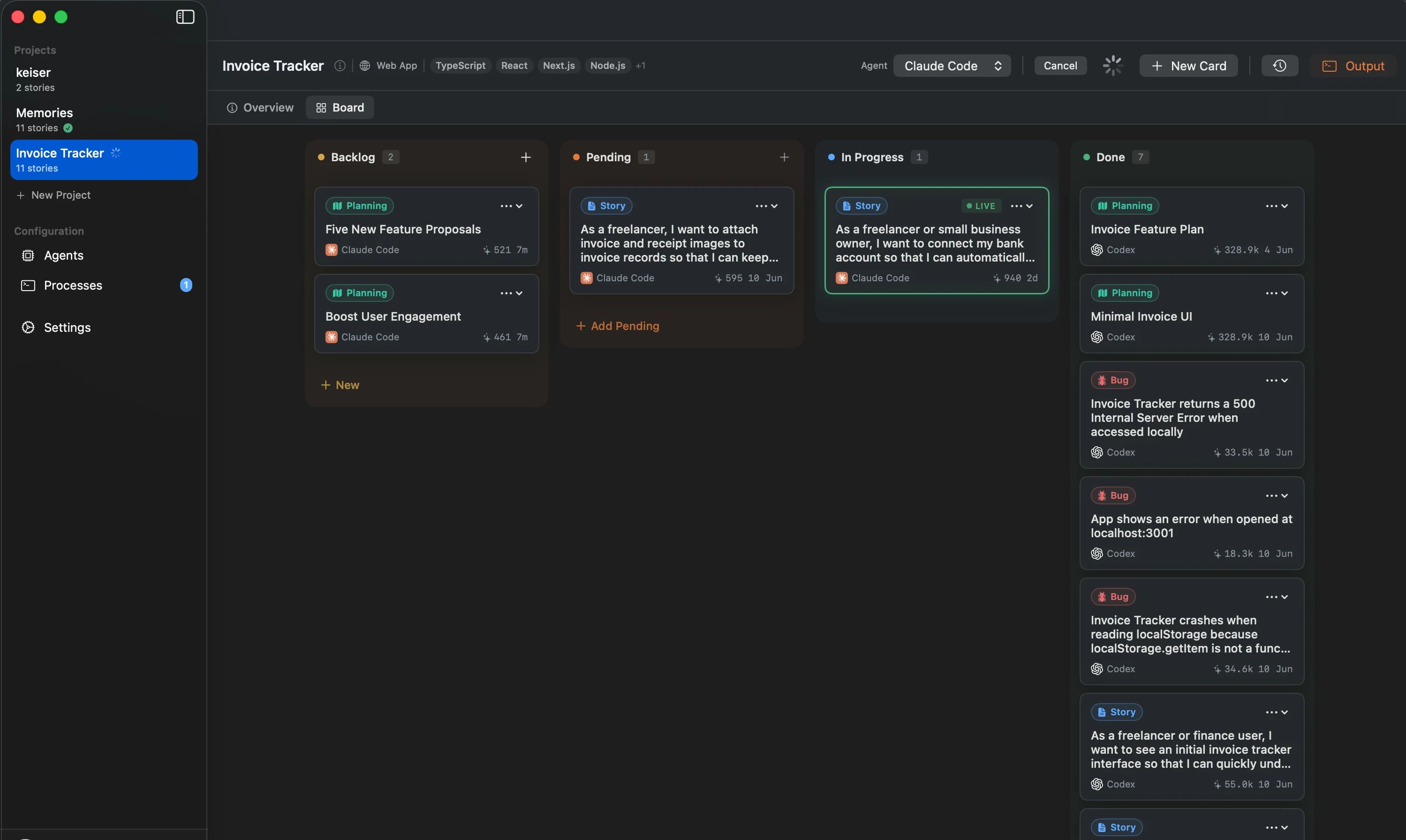
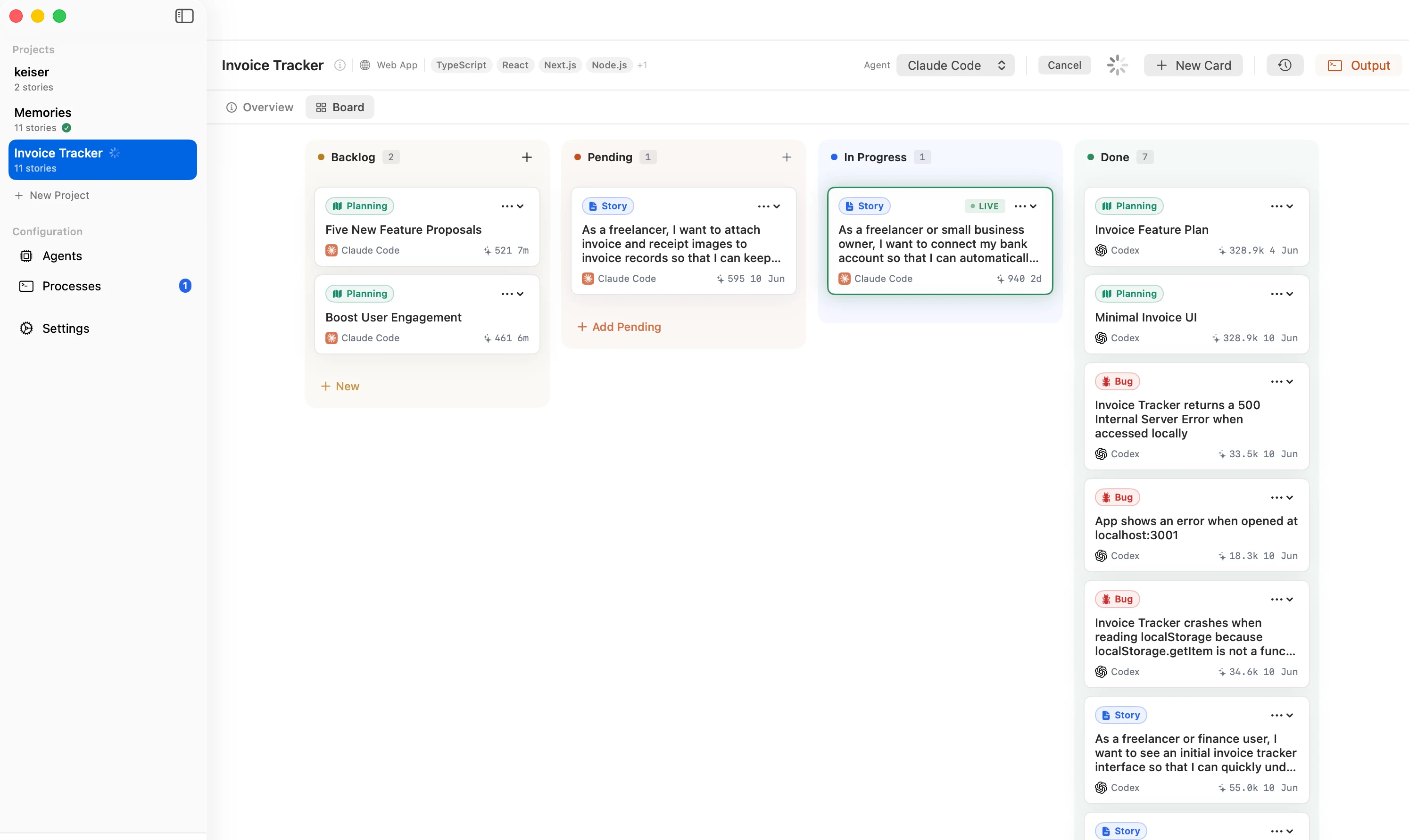
Both agents run locally on your machine, with your project’s context baked into every run — so whichever one you pick, it isn’t writing generic code in a vacuum.
Stop choosing between agents. Use the right one per task. Download for Mac → · See how it works →
Capabilities and models change quickly — the durable takeaway is the workflow: match the agent to the task, and keep both within reach.
Keep reading: run several agents in parallel · project management for Claude Code and Codex.