 Instify
Project Management for Claude Code and Codex
Claude Code and OpenAI Codex are great at building things. They’re not built to organize the work. They live in a conversation: you ask, they execute. That’s perfect for a single task — and quietly painful once you’re running a real project with dozens of features, bugs, and half-finished ideas.
The missing piece isn’t a better agent. It’s project management for AI coding: a way to hold the work as structured items, track them to done, and keep context around — none of which a chat window does.
Why a conversation isn’t a project
An agent’s interface is a thread. On a real project, that costs you:
- No structure. A feature is a unit of work with a goal and a definition of done. In a chat it’s just messages — no backlog, no “in progress,” no “done.”
- No memory of the project. Each session re-learns your stack and conventions. You become the context the agent lacks.
- No history. Six weeks in, “what did we build, when, and with which agent?” has no answer but scrolling.
You can’t prompt your way out of a missing system. You need a layer above the agent.
What project management for AI coding actually looks like
Borrow the parts that have organized software work for two decades, and point them at the agents:
- Stories, not prompts. Each piece of work is a scoped item with a clear goal — “Filter invoices by status on the dashboard” — not a paragraph you retype every session.
- A board. Backlog → In progress → Done. You can see what’s queued, what’s running, and what shipped, at a glance.
- Context attached to the project. Your stack, conventions, and goals live with the project, so every run inherits them instead of starting from zero.
- Run history. Every execution is recorded — what it did, which agent, the result.
That’s the layer Claude Code and Codex don’t provide. It’s exactly the layer that turns a pile of prompts into a project you can actually manage.
How Instify adds it to Claude Code and Codex
Instify is that project-management layer for AI coding agents — it doesn’t replace Claude Code or Codex, it puts a system around them:
- Write features as plain-language stories on a kanban board.
- Attach your stack and instructions once, at the project level.
- Assign the agent per story — Claude Code for the reasoning-heavy work, Codex for the well-defined tasks — and hit Run.
- Watch each run build locally in real time; every run is saved to history.
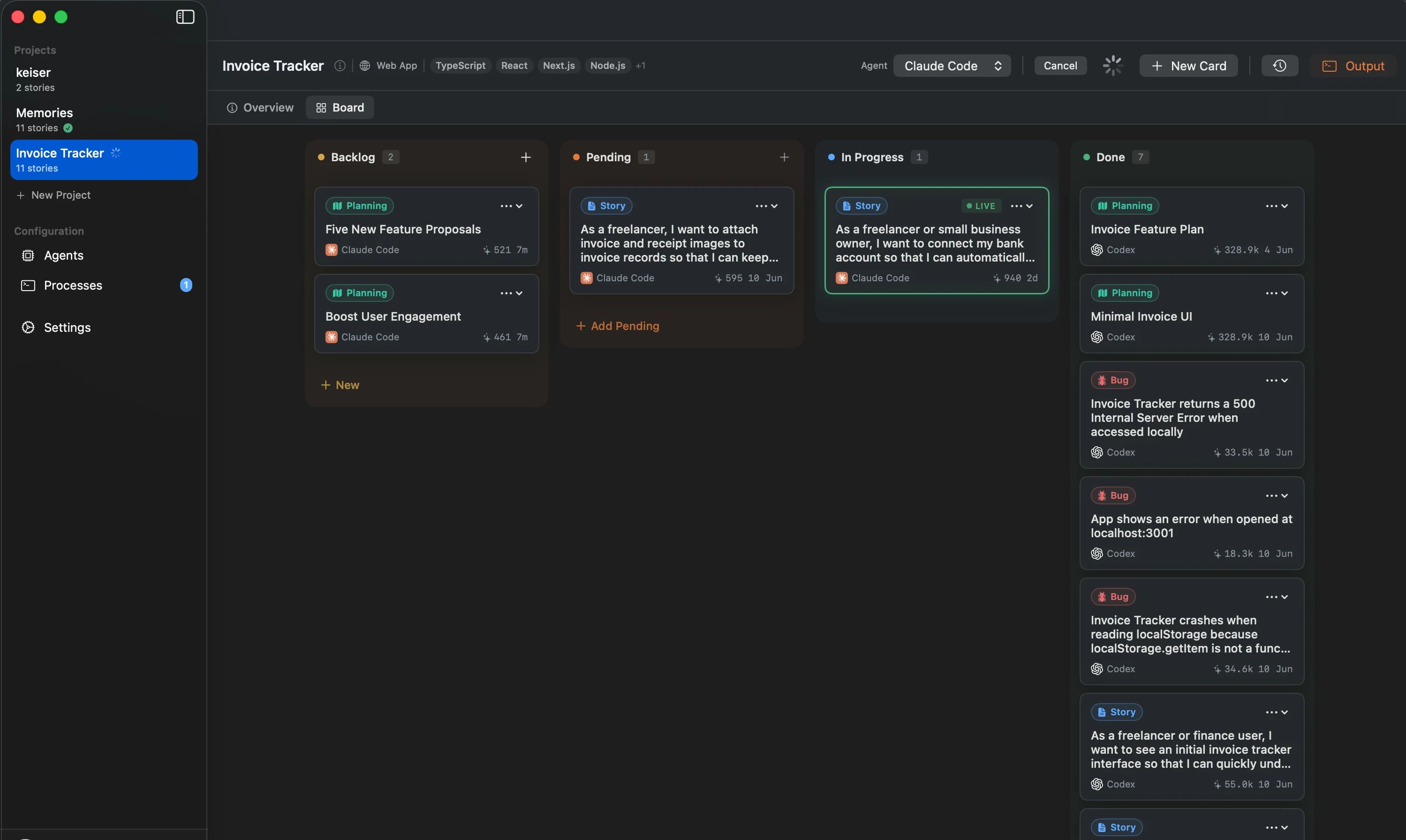
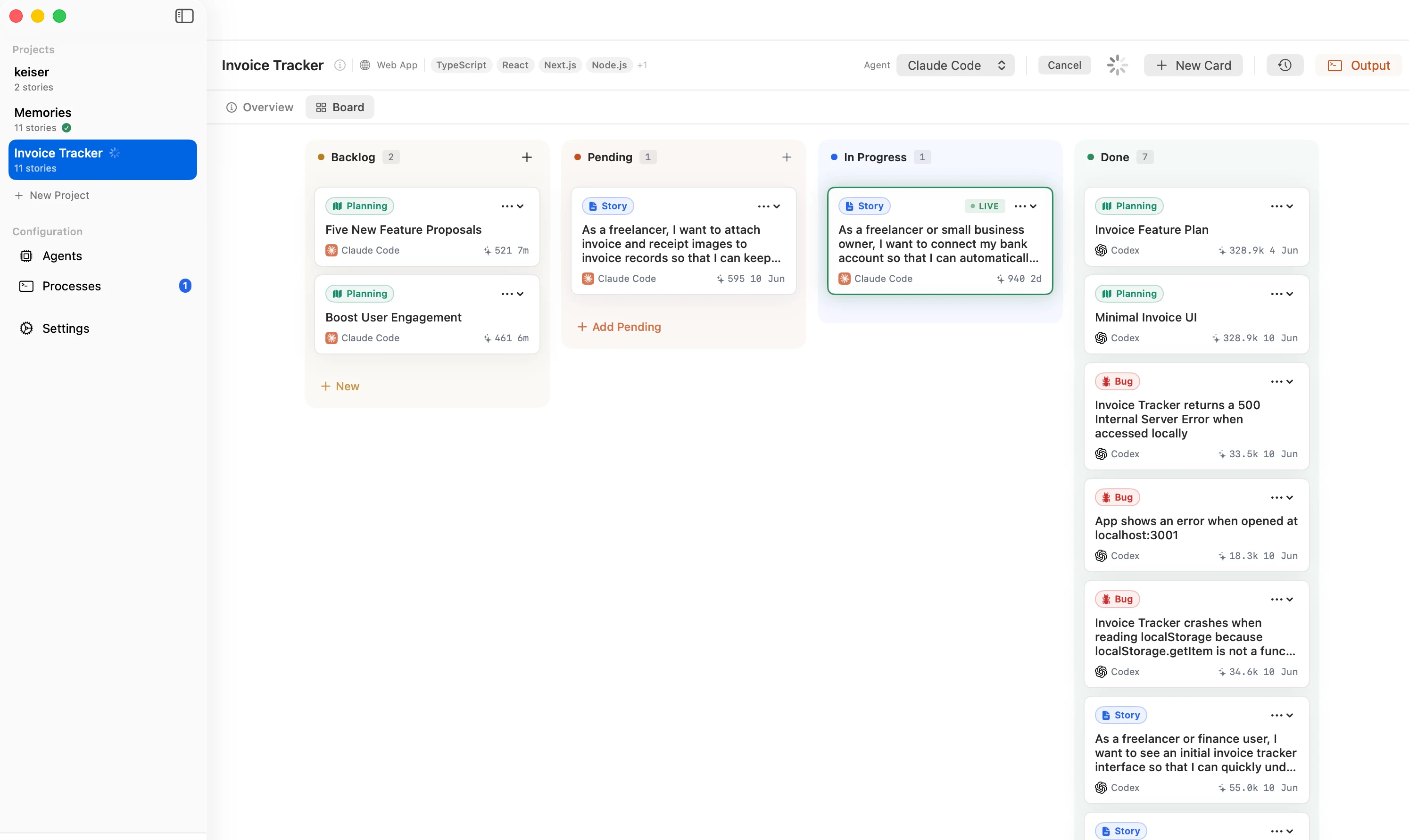
The agents keep doing what they’re good at: writing code. You get the thing they were never meant to give you — a project you can see, organize, and ship. See it in one place on the project management for Claude Code page.
Give Claude Code and Codex a board. Mac-native, runs locally, free to start. Download for Mac → · See the Claude Code GUI →
Keep reading: why kanban fits AI coding agents so well.